A dive holiday is only as good as the logistics around it. Fish 'n Fins, Palau's original dive centre, has been closing those gaps since 1972.
Palau Without Loose Ends
The Problem With Paradise
Ask any diver who has planned a big trip to a remote island what went wrong, and the answer is rarely the diving. It is the pieces around it - the transfer that never arrived, the hotel that lost the booking, the dive boat moored an hour from where you are sleeping. Paradise, it turns out, can be remarkably fragmented - and every seam is a chance to lose a day you flew ten thousand miles to spend underwater.
One Roof in Malakal
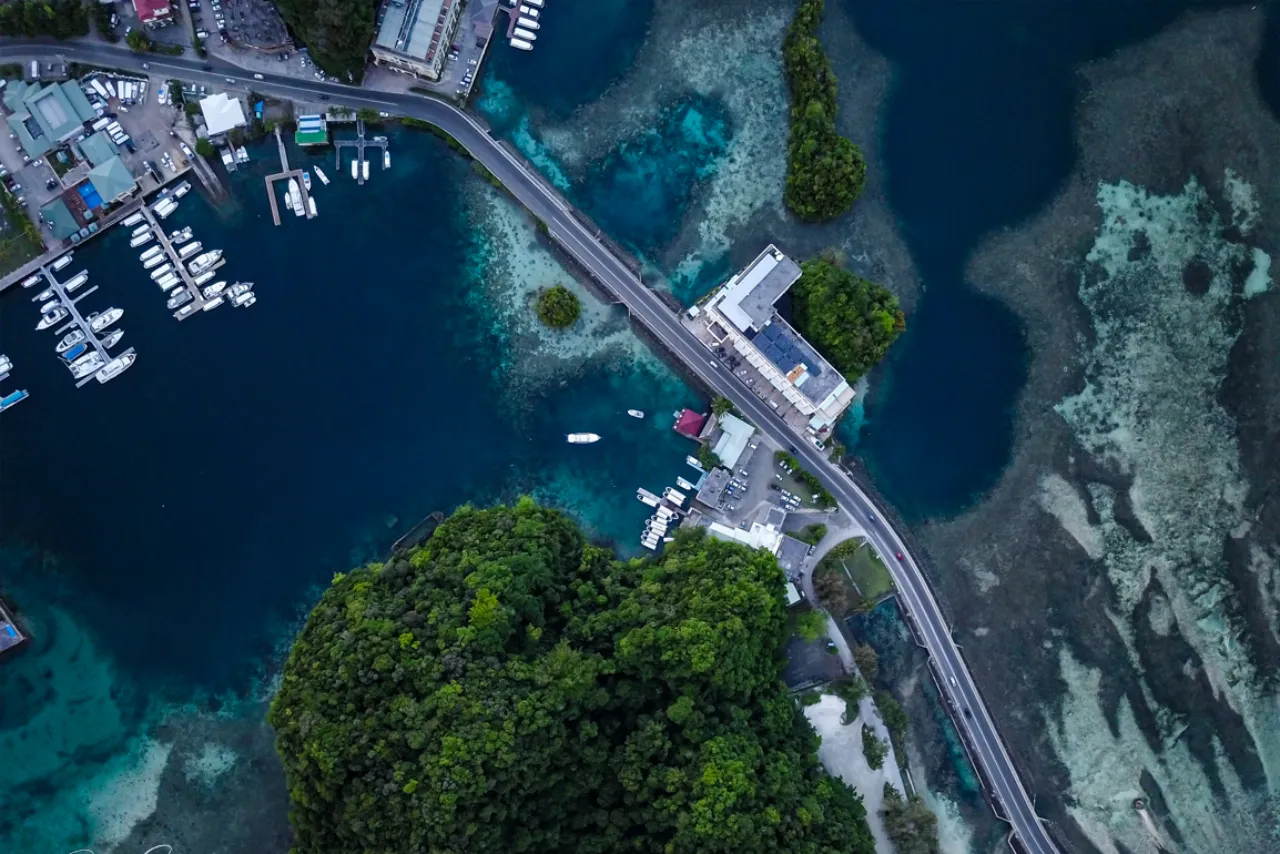
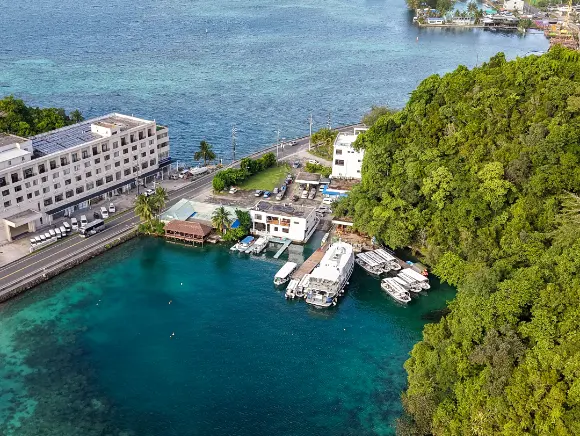
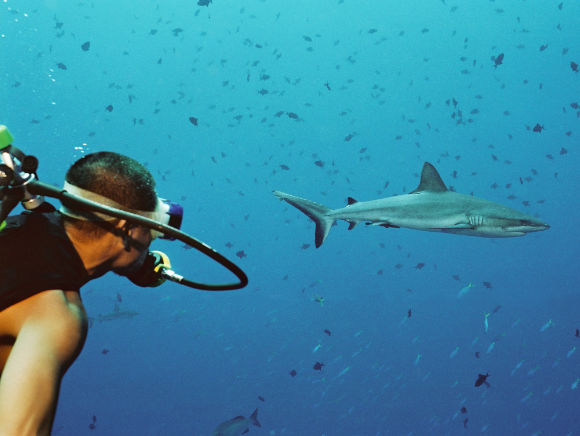
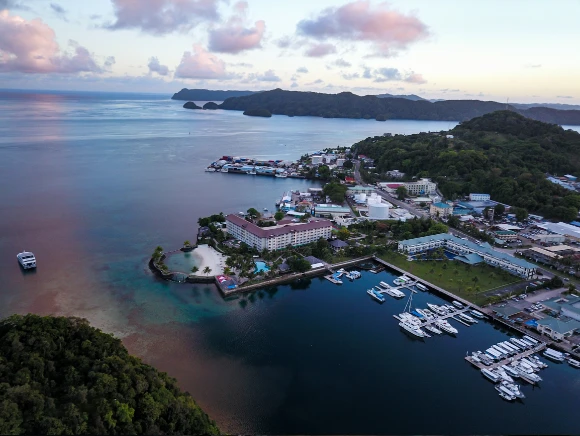
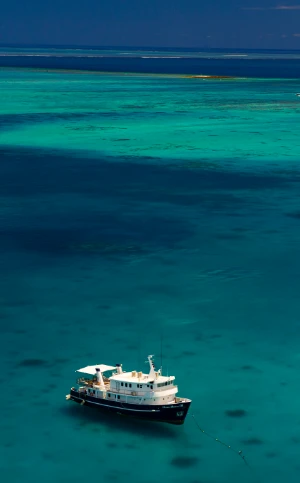
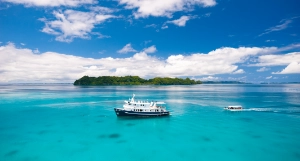
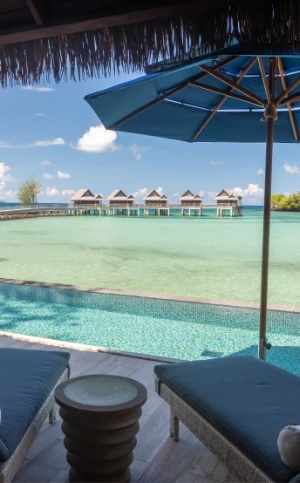
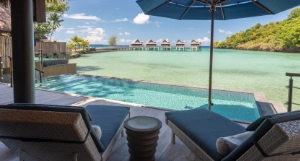
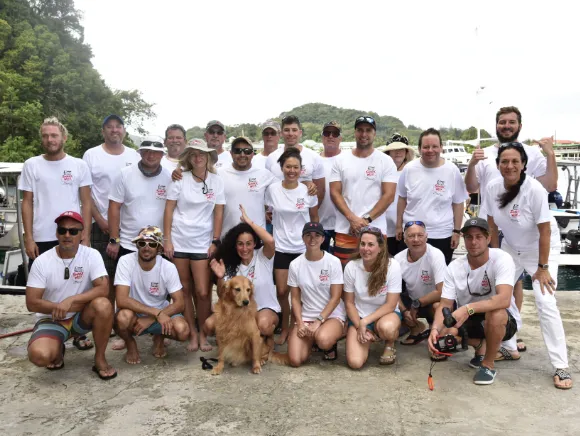
Palau is one of the last places on earth where that should never happen. The reason sits in Malakal, and it has been getting things right since 1972. Fish 'n Fins is not merely Palau's original dive centre. It is the rare operation that has quietly assembled the whole holiday under one roof - a genuine one-stop shop where you book your hotel, your diving, your tours and your transfers in a single place, all organised and executed by the same team. Add its own fleet of speedboats, its private docks, its dive centre, a restaurant and its luxury liveaboard, Ocean Hunter, and the seams simply disappear.
What Vertical Integration Means
That is what “vertical integration” means when it is done properly - and for divers, it changes everything.
The Ordinary Dive Holiday, Collapsed
Picture an ordinary dive holiday. You land, hunt for your transfer, settle in, find the shop, sort your gear, and hope the boat is ready and the sea cooperates. Each step is a crack that a lost morning - or an entire day of diving - can slip through. With Fish 'n Fins, those steps collapse into one - you book once, you are collected, your gear is already waiting, and your boat leaves from the operator's own dock, minutes from your hotel. You dive, you eat at Barracuda, you repeat.
Thirty-Five Years Without a Cancelled Dive
This matters most when the stakes are highest - when someone has crossed the world for a handful of days beneath the surface. A single cancelled trip stings. A single wasted morning is unforgivable. So Fish 'n Fins has built its entire operation around making sure it never happens: - it has not cancelled a single dive day trip for technical reasons in more than 35 years. The secret is surplus capacity. The company keeps more boats than its daily schedule requires, so a spare is always idling at the dock, ready to be swapped in the moment anything goes wrong. Believe it - the record proves it.
From First Breath to Ocean Hunter
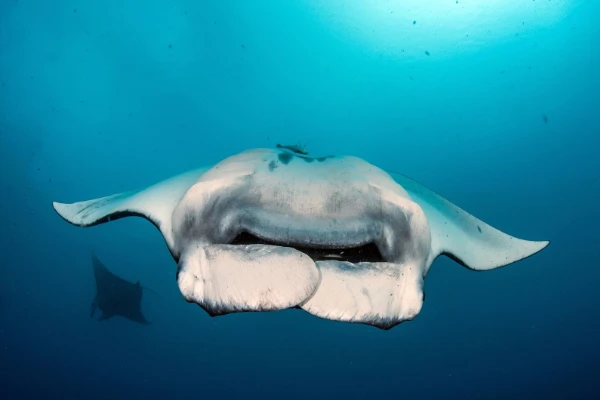
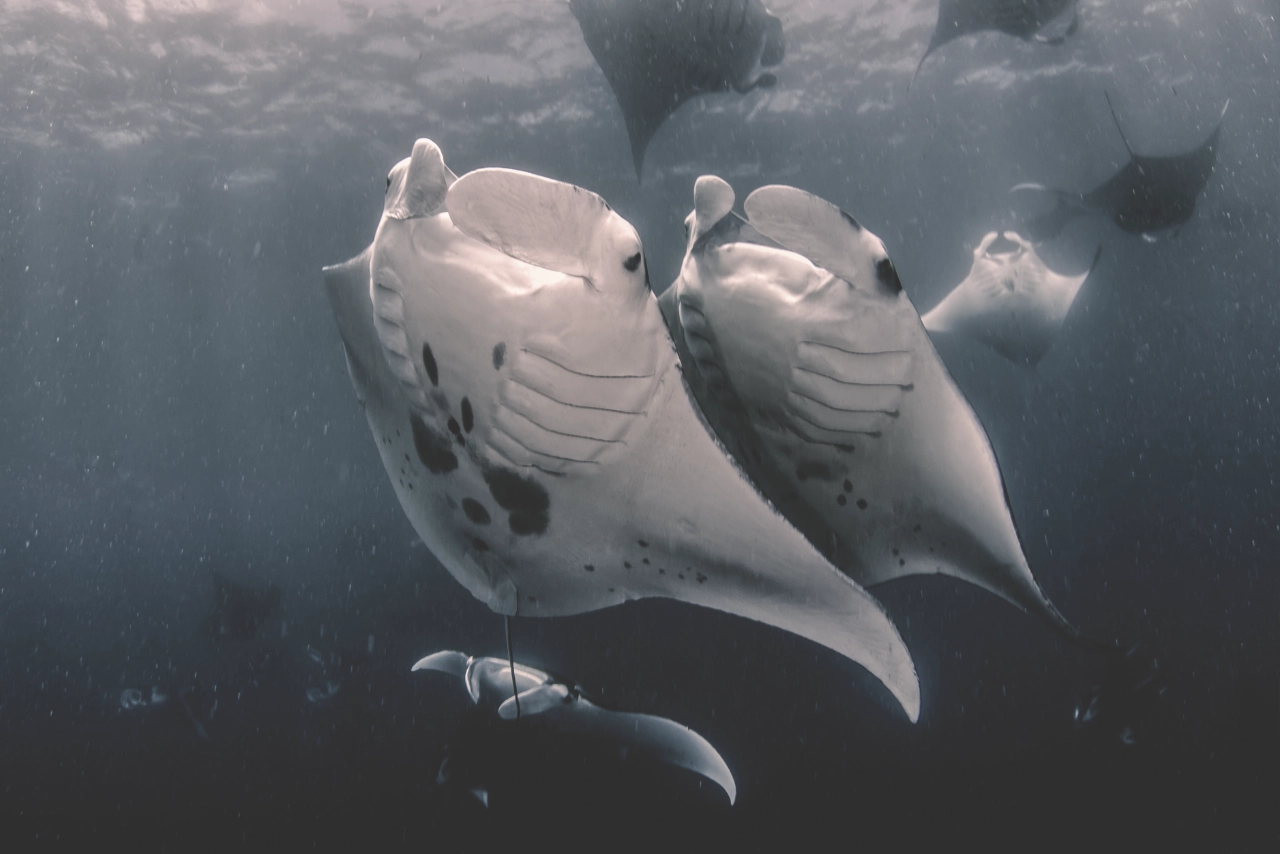
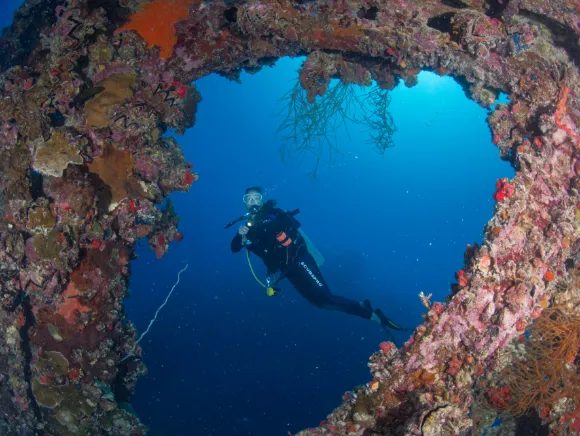
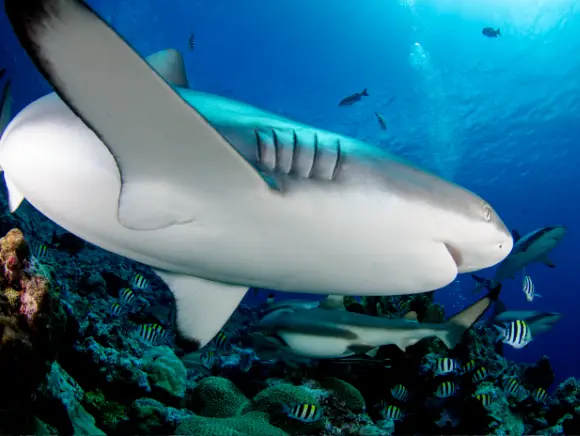
Then there is the range. The same company that introduces beginners to the water and certifies instructors - it is a PADI 5-Star Instructor Development Center - also leads seasoned divers to mantas, reef sharks, caves and Second World War wrecks. And when you want to go deeper, in every sense of the word, Ocean Hunter is waiting - a luxury liveaboard where the diving, the gourmet galley and the two sun-deck Jacuzzis all belong to the same family business.
Answerable for the Whole Trip
The result is a trip that feels less assembled and more composed - one team answerable for the whole experience, from the airport to the final safety stop. For divers who measure a holiday in bottom time rather than logistics, that is not a small convenience. It is the entire point.
Palau rewards those who arrive ready. Fish 'n Fins simply makes sure they do.
Das Problem mit dem Paradies
Fragt man erfahrene Taucher, was auf einer großen Reise zu einer abgelegenen Insel schiefgelaufen ist, geht es selten ums Tauchen selbst. Es geht um das Drumherum - den Transfer, der nie kam. Das Hotel, das die Buchung verloren hat. Das Tauchboot, das eine Stunde von der eigenen Unterkunft entfernt liegt. Das Paradies kann erstaunlich zerstückelt sein - und jede Nahtstelle ist eine Gelegenheit, einen Tag zu verlieren, für den man um die halbe Welt geflogen ist.
Alles unter einem Dach in Malakal
Palau ist einer der letzten Orte, an denen das nicht passieren sollte. Der Grund dafür liegt in Malakal und heißt Fish 'n Fins - seit 1972. Das Unternehmen ist nicht nur Palaus erstes Tauchzentrum, es ist einer der seltenen Betriebe, die den ganzen Urlaub unter einem Dach vereinen - ein echter One-Stop-Shop, bei dem man Hotel, Tauchgänge, Touren und Transfers an einer einzigen Stelle bucht und alles vom selben Team organisiert und durchgeführt wird. Dazu kommen eine eigene Flotte aus Speedbooten, private Anlegestellen, ein eigenes Tauchzentrum, ein Restaurant und mit der Ocean Hunter ein eigenes Luxus-Liveaboard.
Was vertikale Integration wirklich bedeutet
Genau das bedeutet „vertikale Integration“, wenn sie richtig gemacht ist. Und für Taucher ändert sie alles.
Der gewöhnliche Tauchurlaub - aufgelöst
Man stelle sich einen gewöhnlichen Tauchurlaub vor - Man landet, sucht den Transfer, richtet sich ein, findet den Tauchshop, sortiert die Ausrüstung und hofft, dass Boot und Wetter mitspielen. Jeder Schritt ist eine Lücke, durch die ein verlorener Vormittag - oder ein ganzer Tauchtag - rutschen kann. Bei Fish 'n Fins fallen diese Schritte zu einem einzigen zusammen - einmal buchen, abgeholt werden, die Ausrüstung wartet bereits, und das Boot legt am eigenen Steg ab, nur Minuten vom Hotel entfernt. Tauchen, im Barracuda essen, wiederholen.
35 Jahre ohne abgesagten Tauchtag
Das zählt am meisten, wenn viel auf dem Spiel steht - wenn jemand für eine Handvoll Tage unter Wasser um die halbe Welt gereist ist. Eine abgesagte Tour tut weh. Ein vertaner Vormittag ist unverzeihlich. Genau deshalb hat Fish 'n Fins seinen ganzen Betrieb darauf ausgelegt, dass es dazu nie kommt. Seit mehr als 35 Jahren wurde kein einziger Tagesausflug zum Tauchen wegen technischer Probleme abgesagt. Das Geheimnis ist überschüssige Kapazität. Das Unternehmen hält mehr Boote vor, als der Tagesbetrieb braucht, sodass am Steg immer ein Reserveboot bereitliegt, das sofort einspringt, sobald etwas nicht rund läuft. Glauben Sie es ruhig - die Bilanz beweist es.
Vom ersten Atemzug bis zur Ocean Hunter
Dazu kommt die Bandbreite. Dasselbe Unternehmen, das Anfänger ans Wasser führt und Tauchlehrer ausbildet - es ist ein PADI 5-Sterne Instructor Development Center, bringt erfahrene Taucher zu Mantas, Riffhaien, Höhlen und Wracks aus dem Zweiten Weltkrieg. Und wer tiefer gehen möchte, im wörtlichen wie im übertragenen Sinn, für den wartet die Ocean Hunter - ein Luxus-Safarischiff, bei dem das Tauchen, die Gourmet-Küche und zwei Jacuzzis auf dem Sonnendeck zum selben Familienbetrieb gehören.
Verantwortlich für die ganze Reise
Das Ergebnis ist eine Reise, die sich weniger zusammengestückelt als komponiert anfühlt - ein Team, das vom Flughafen bis zum letzten Sicherheitsstopp die Verantwortung trägt. Für Taucher, die einen Urlaub in Grundzeit statt in Logistik messen, ist das kein kleiner Vorteil. Es ist der eigentliche Punkt.
Palau belohnt die, die vorbereitet ankommen. Fish 'n Fins sorgt dafür, dass sie es tun.
Palau is one of the few places on Earth where sharks still shape the experience more than crowds do.
Protected waters, mass fish spawning and extraordinary dive sites make this island nation feel like the last true shark kingdom.
More Sharks Than Tourists - Palau, Where Sharks Still Rule
More sharks than tourists
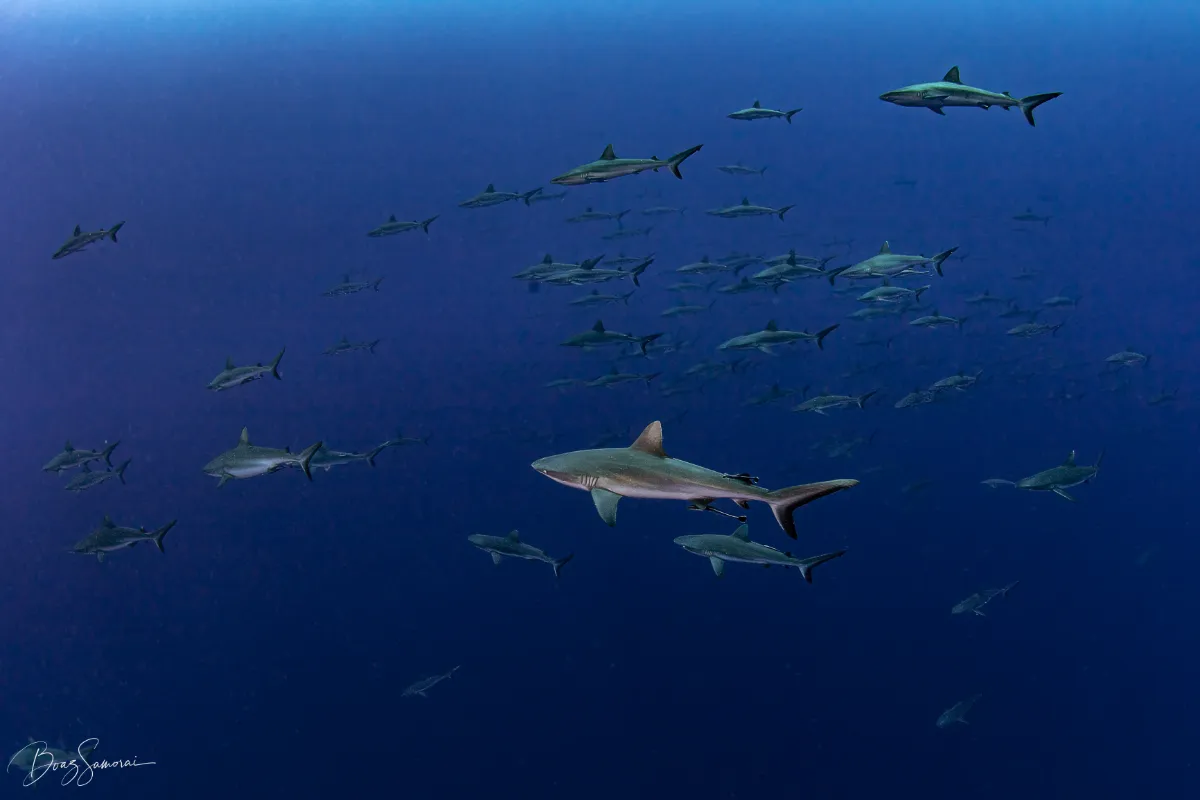
Palau is one of the few places on Earth where the locals are outnumbered by sharks. This tiny island nation in the western Pacific has a population of just 18,000, and its waters hold one of the densest shark populations anywhere. More sharks than tourists is not a marketing gimmick here, it is simply how things are.
Why sharks gather here
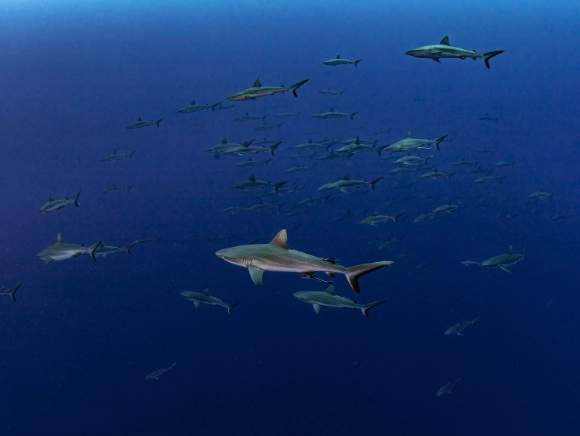
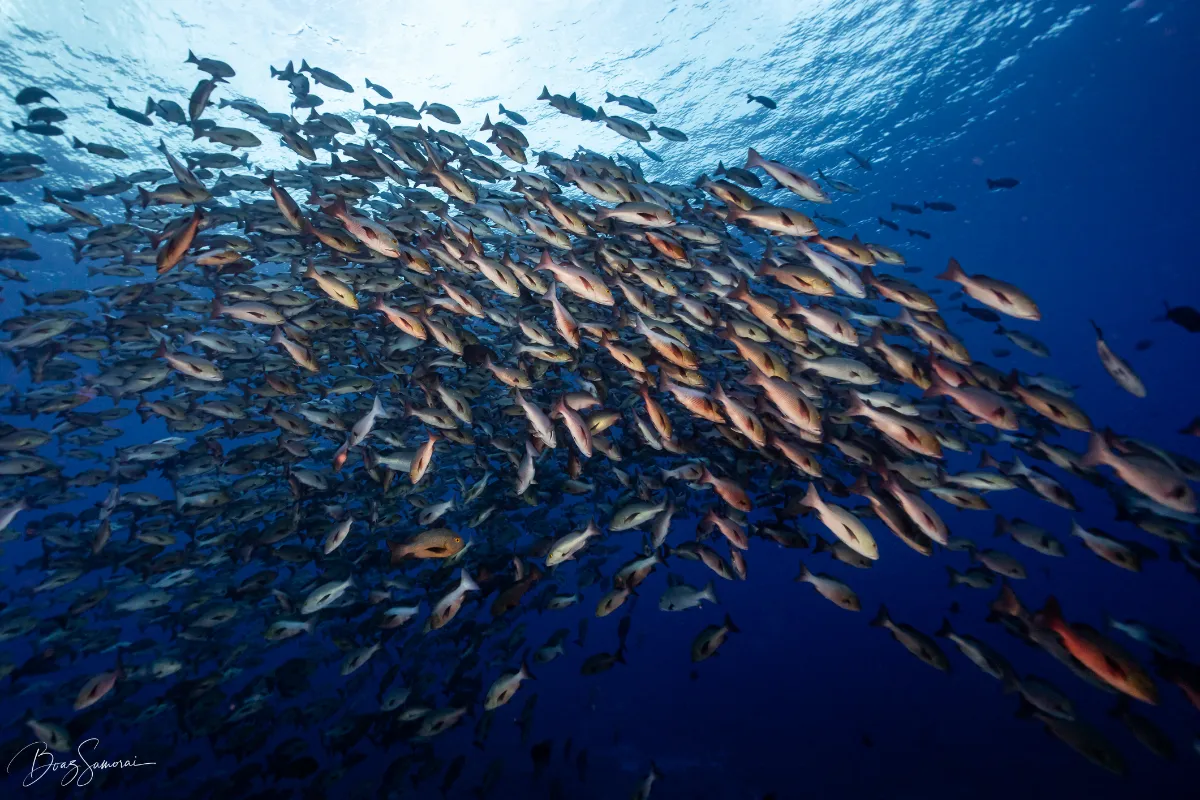
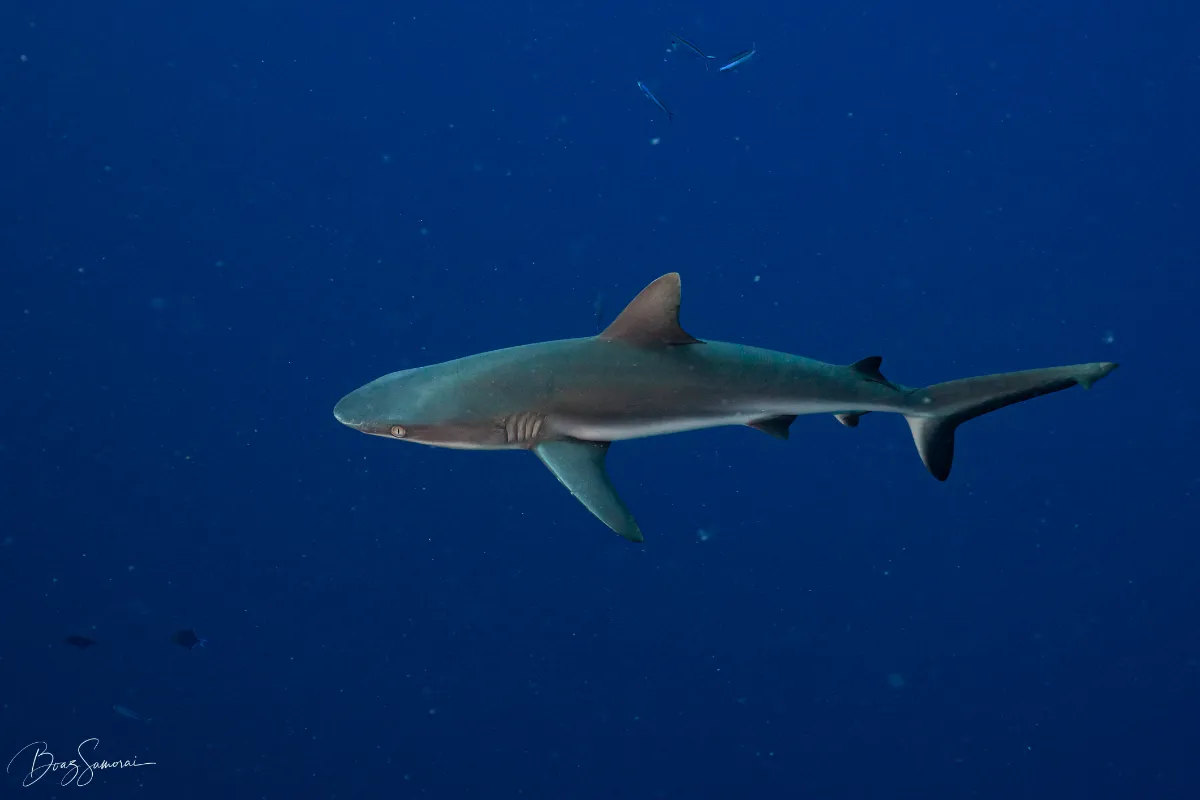
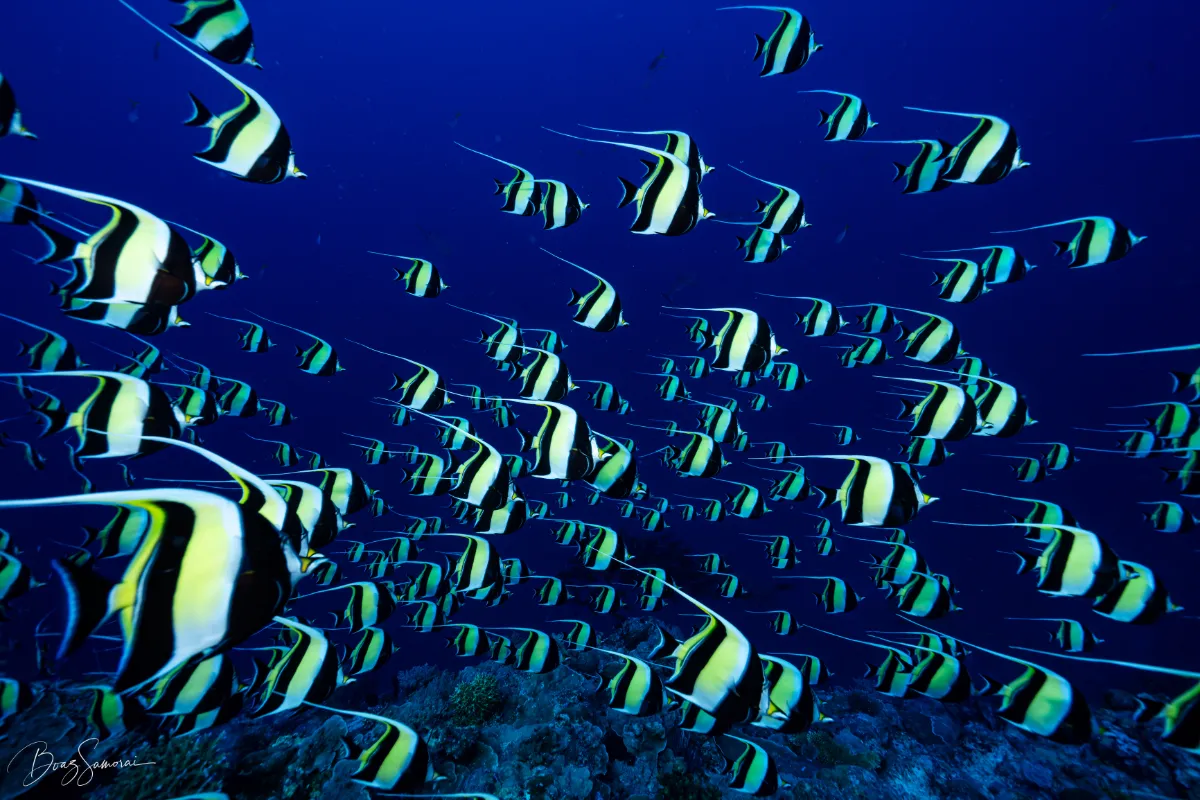
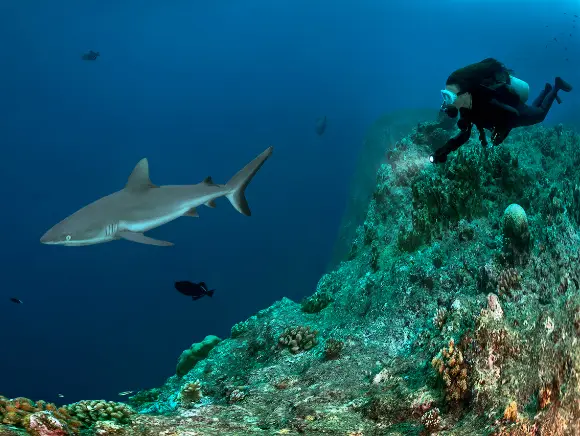
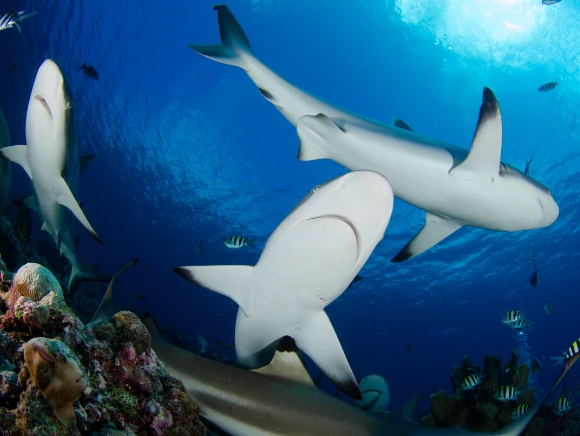
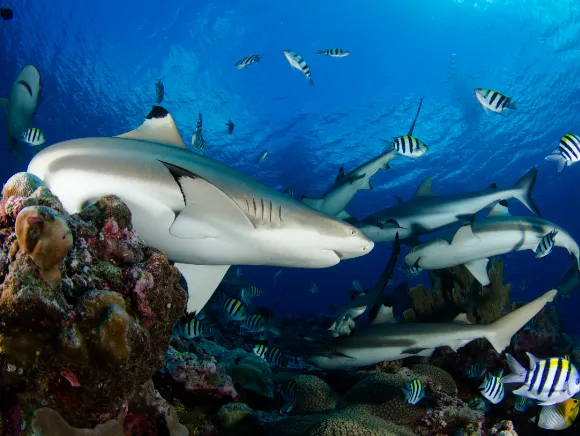
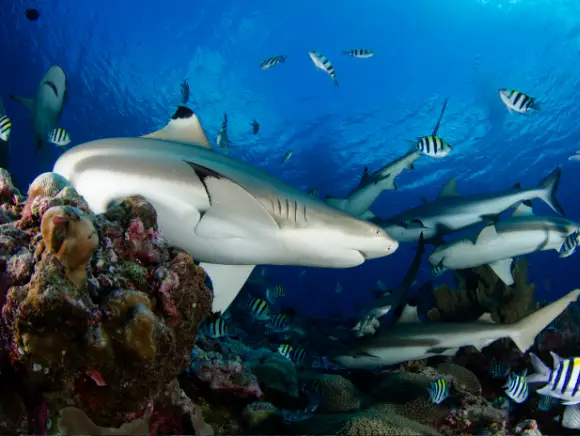
The secret lies in the fish. Palau sits on a network of spawning aggregation sites where thousands of snapper, moorish idols and other reef fish gather in enormous schools to breed. And where the bait goes, the hunters follow. Grey reef sharks, white-tips and black-tips patrol the aggregation sites, joined from time to time by true ocean wanderers such as hammerheads and the rare oceanic white-tip. During the Moorish Idol (Zanclus cornutus) spawning in 2023, an event so spectacular it drew a BBC camera crew, divers counted hundreds of sharks circling among the spawning fish. Nothing quite like it has ever been documented anywhere else.
Protected by policy
Palau's abundance is no accident, it is policy. In 2009 the country became the first nation on Earth to declare its waters a shark sanctuary, banning shark fishing outright and outlawing the trade in shark products. The Palau National Marine Sanctuary followed in 2020, closing 80 percent of the country's exclusive economic zone to fishing entirely. It is rare to see a government put protection ahead of profit so clearly, and divers get to enjoy the payoff.
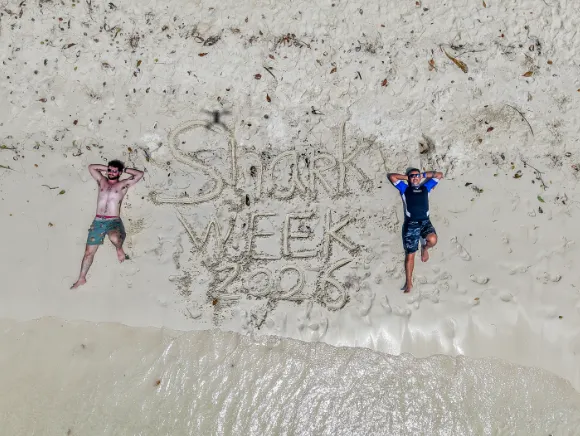
Shark Week 2027
If you want to make shark encounters the centerpiece of your trip, Shark Week is the way to do it. From February 28 to March 7, 2027, Fish 'n Fins, Palau's legendary dive operation in Malakal, runs the next edition of its celebrated event. Guests pick a five- or seven-day program, diving Palau's best shark sites every day, with seminars from international experts and evening debriefs. For many, the highlight is the citizen science element: participants log data on every dive, which the Micronesian Shark Foundation then analyzes alongside scientists from Stanford and National Geographic. A video contest adds some friendly rivalry, with prizes ranging from a GoPro to a professional camera. And if your trip lines up with the March full moon, you get a bonus, snapper spawning season, which pulls in even more sharks.
Getting there
Getting there is easier than you might expect. China Airlines flies from Frankfurt to Taipei and also offers service from Vienna to Taipei. From there, it is just a short onward flight to Koror on the Taipei to Koror route. One stop, one ticket, and you are standing at the gateway to the world's biggest shark paradise. The sharks are already looking forward to your arrival.
Mehr Haie als Touristen - Palau, wo der Hai noch König ist
Palau gehört zu den wenigen Orten der Welt, an denen Haie noch immer das Bild prägen und nicht die Menschenmassen.
Geschützte Gewässer, massive Fischaggregation und spektakuläre Tauchplätze machen den Inselstaat zu einem echten Königreich der Haie.
Mehr Haie als Touristen
Wer nach Palau fliegt, braucht keine Angst vor Menschenmassen zu haben. Der Inselstaat im Westpazifik zählt gerade einmal rund 18.000 Einwohner. Und mit ihnen teilen sich die Meere ein Publikum, das es nirgendwo sonst auf der Welt so zahlreich gibt, Haie. Mehr Haie als Touristen, das ist in Palau keine Übertreibung, sondern Alltag.
Warum sich hier so viele Haie sammeln
Der Grund ist ein Naturphänomen, das Taucher nur an wenigen Orten der Erde erleben. Wenn sich Tausende Schnapper, Riffbarsche oder Fahnenfische zum Laichen versammeln, folgen ihnen die Jäger. Graue Riffhaie, Weißspitzen- und Schwarzspitzenhaie patrouillieren an den Aggregationsplätzen, immer wieder gesellen sich auch Hochseearten wie Hammerhaie oder der seltene Weißspitzen-Hochseehai dazu. Bei der Moorish-Idol-Aggregation (Zanclus cornutus), die 2023 sogar ein BBC-Kamerateam anlockte, wurden Hunderte Haie beobachtet, die zwischen den laichenden Fischen kreisten. Ein Schauspiel, das weltweit einmalig dokumentiert wurde.
Schutz durch Politik
Dass Palau diese Fülle bewahrt hat, ist kein Zufall, sondern Politik. Bereits 2009 erklärte der Inselstaat als erstes Land der Welt seine Gewässer zum Haischutzgebiet. Seitdem gilt ein striktes Fangverbot für Haie, der Handel mit Hai-Produkten ist untersagt. Mit dem Palau National Marine Sanctuary folgte 2020 die Krönung. 80 Prozent der ausschließlichen Wirtschaftszone sind seither No-Take-Zone, in der nicht gefischt werden darf. Selten zeigt ein Land so klar, dass Schutz vor Profit geht, und Taucher ernten die Früchte.
Shark Week 2027
Wer die Begegnung mit Palaus Haien zum Höhepunkt seiner Reise machen will, ist bei der Shark Week genau richtig. Vom 28. Februar bis 7. März 2027 veranstaltet Fish 'n Fins, die legendäre Tauchbasis in Malakal, die nächste Ausgabe des Events. Fünf oder sieben Tage lang tauchen die Gäste täglich an Palaus besten Hai-Spots, dazu kommen Seminare mit internationalen Experten und die abendliche Auswertung der Tauchgänge. Besonders reizvoll ist der Citizen-Science-Gedanke. Die Teilnehmer sammeln während der Tauchgänge Daten, die die Micronesian Shark Foundation gemeinsam mit Wissenschaftlern von Stanford und National Geographic auswertet. Wer mag, mischt sich in den Video-Wettbewerb ein, die Preise reichen von der GoPro bis zur Profi-Kamera. Und wer zur Vollmondzeit im März taucht, erlebt nebenbei die Schnapper-Laichzeit, dann werden es noch mehr Haie.
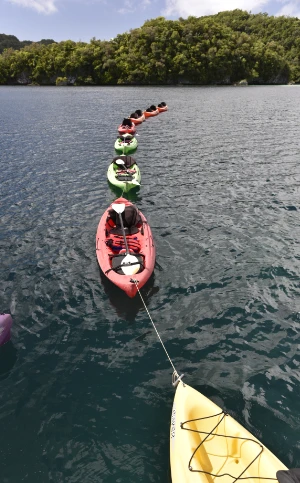
Our group tours give you the full Palau experience - expert guides, a well-planned itinerary, and great company. But if you ever want to add your own detours, linger longer at a snorkel spot, or head somewhere most boats skip, private charters and small-group kayak adventures open up an even deeper side of the islands.
The Right Way to See Palau: Private Boat Charters, Kayaking the Rock Islands, and the Quiet Magic of Nikko Bay
A Fish 'n Fins guide to exploring Palau on your terms - July 2026
Palau is one of those places that sounds like a cliché until you get here. The water really is that clear. The limestone islands really do rise out of the sea like dinosaur spines. The marine life is so dense that after a few days you start taking it for granted, which is ridiculous, because nowhere else on earth looks like this. The question is not whether you should go - it's how you should see it.
We run excellent group tours that cover Palau's top spots - and those are a great way to see the highlights with a knowledgeable guide and fellow travelers. But there are other ways to experience the islands too. You can rent your own boat for the day and go where you want, when you want. You can paddle through caves that feel like a movie set. You can drift across a bay so still and so rich with coral that you forget to take photos because you are too busy staring. All three of these are on the table with us at Fish 'n Fins, the dive and adventure center that has been running trips in Palau since 1972. Let us talk about each one.
Your Own Boat, Your Own Day - Private Charters with Fish 'n Fins
A private boat charter is a different kind of experience. It is not for everyone - the boats run on large motors and fuel costs add up, so it sits at the premium end of what we offer. But for those who want full control over their day, it delivers something no group tour can. You decide when to leave, where to stop, how long to stay, and whether you want to push on or call it a day and float somewhere pretty with a cold drink.
We run a fleet of seven speed boats, all kept in good shape, with comfortable seats, dry boxes for your things, and enough power to get you across the lagoon without bouncing your spine loose. When you charter with us, a driver and guide come with the boat - Palauan law requires it for all marine activities, and honestly, you want them anyway. Our guides grew up in these waters and know every channel, reef pass, and snorkel spot that does not show up on Google Maps.
Pricing depends on two things: the size of the boat and the fuel needed for the tour. A morning run to the nearby snorkel sites burns less gas than a full-day trip out to the far atolls. So you pay for what you actually use, not a flat rate that assumes a full tank regardless. Our team will talk you through the options and give you a straight answer on what it costs before you commit.
Who rents these boats? Families with kids who need to move at toddler speed and stop for bathroom breaks. Groups of divers who want to hit three different sites before lunch. Photographers who need to wait for the light to change. Couples who want a beach to themselves for an afternoon. The beauty of a private charter is that you design the day around what you and your group want to do.
A typical day might look like this: we pick you up from your hotel around eight, grab an espresso from the Barracuda Restaurant next door, and head out while the lagoon is still flat. We cruise through the Rock Islands, stop at a quiet snorkel cove where the corals start at the surface, then push on to a sandbar for a swim. Your guide sets up lunch on a patch of beach that sees maybe two visitors a week. We provide a bento lunch, life vests, and snorkeling gear if you need it. You eat, you nap, you snorkel some more, and we bring you back to your hotel in the late afternoon with the sun dropping behind the islands. A day that belongs entirely to you.
“
The team was incredibly friendly and accommodating, and made sure I had everything I needed for a safe and enjoyable dive. We felt well taken care of and had a fantastic time diving in Palau. Special thanks to our guide Oggie.
- Margarete F., Fish 'n Fins guest
The Indiana Jones Tour - Kayaking, Caves, and Stone Money
For a place that sits quietly in the middle of the Pacific, Palau has a surprising amount of history buried in its jungles. The Indiana Jones Tour is the one trip that pulls all of it together: the paddling, the hiking, the caves, the ancient quarries, the Hollywood trivia, the lunch on a real beach. It is a long day, and it is worth every minute.
You start at your hotel pickup the same way, early morning, and your guide ferries you up to Airai, a state just north of Koror. From there the tour unfolds in stages, and each one feels different from the last.
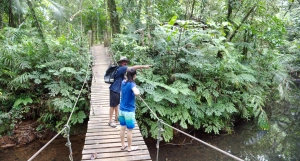
First comes the rainforest hike. You walk through dense jungle foliage - huge trees, palms, ferns, things that look like they belong in a botanical garden that no one bothered to name. The trail leads to a small yellow hut that marks the entrance to a Yapese stone money quarry. This is where the famous stone money of Yap was mined. Huge limestone discs, some of them weighing several tons, were carved out of the Palauan rock, loaded onto rafts and canoes, and transported across open ocean to Yap, where they are still used as currency today. Standing in the quarry, looking at the half-finished discs still embedded in the stone, you get a sense of how ambitious that journey was. These people moved mountains across the sea because money, apparently, has always been worth the trouble.
Your guide will tell you stories about the forest along the way - which trees produce the nuts that Palauans use for traditional medicine, how to spot the crabs that climb palm trunks, what the different bird calls mean. Our guides know this ground intimately, and it shows. Bring a flashlight, because there are caves in the forest that are better explored with a beam cutting through the dark. Stalactites, cool air, the sound of dripping water. It really does feel like an Indiana Jones set.
After the hike you get back in the water. The staff have already lowered the kayaks, so you climb in and start paddling along the base of the Rock Islands. The limestone formations look different from sea level - bigger, more weathered, more ancient. You glide into a cave, then another, passing under stalactites that have been forming since before anyone thought to carve stone money. The kayak makes no sound, so the only noise is the drip of water and the occasional bird echoing off the cave walls. It is the kind of quiet that makes you want to stop talking.
You paddle through a mangrove channel, narrow and green and almost completely shaded, and it opens into a small, protected bay. You leave the kayaks, walk to another cave on foot, and then head to Lee Marvin Beach. Lee Marvin shot the film “Hell in the Pacific” here in 1968. The beach is beautiful - white sand, clear water, palms leaning out over the shore - and our chefs have packed a bento lunch for you. Cold beer and soft drinks are available too, so you can sit on the sand, eat well, and process everything you have seen so far.
The last stop of the day is Mandarin Fish Lake, a short speedboat ride away. It is a shallow, protected bay where mandarin fish hang out in the shadow of the Rock Islands even during the day. You snorkel, you float, and then you head back to Koror, tired in the best possible way.
The Indiana Jones Tour runs with a minimum of six people and costs $192.50 per person, plus a $25.00 Airai Park fee. Departure is 8:00 AM with hotel pickup included. Life vests and bento lunch are provided, and you can rent snorkeling gear if you do not have your own. A basic level of fitness is recommended - there is hiking, kayaking, and a fair amount of moving around. It is the most adventurous single day you can book in Palau, and it has no real competitor.
Nikko Bay - Where the Water Tells the Story
Nikko Bay is a different experience entirely. Where the Indiana Jones Tour is about adventure and variety, Nikko Bay is about stillness. It sits in the heart of Palau's UNESCO World Heritage Site, ringed by limestone walls that have protected it from surf, surge, and storm damage for centuries. The result is a coral garden so dense and so healthy that it looks like a nature documentary that someone saturates the color on.
You kayak here. No engine, no rush. We pick you up from your hotel around 8:00 AM, and your guide either drives you by car to the boat ramp in Ngermid or brings you by boat through the Rock Islands, depending on conditions. Either way, you end up on the water in a kayak with a paddle in your hand and a whole bay ahead of you.
The corals in Nikko Bay are the main event. They start right at the surface, so you can see them clearly from your kayak - delicate branching corals, massive brain corals, soft corals that pulse with the current. In the shallows they glow with a fluorescent intensity that looks artificial until you dip your mask in and realize it is real. The water is so calm and so clear that you can see the bottom ten feet down as if you were looking through glass.
Paddling through Nikko Bay is a sensory thing. You hear the water dripping off your paddle blade. You smell the mangroves and the flowers that grow along the shore. You see fish darting under your hull. The limestone walls rise up around you like cathedral arches, and every now and then you come across a cave or a tunnel that invites you in. The whole place feels protected, timeless, like a room that the ocean built for itself.
There is history here too. Nikko Bay was a battleground during World War II, and remnants of bunkers and encampments are still hidden in the foliage. Your guide will point them out and tell you what happened there, and the quiet of the bay takes on a different weight when you know what it has witnessed.
The tour costs $159.50 per person with a minimum of four participants. We pick you up from your hotel and bring you back after the tour. Your guide brings water and a bento lunch, and life vests are provided. You need a Koror State permit, sun protection, a towel, and snorkeling gear (which we can rent you if you do not have your own). A reasonable level of fitness helps - this is a paddling tour - but you set your own pace on the water. It is the perfect choice for a day when you want to move slowly, look closely, and let the place work its way into you without distraction.
Fish 'n Fins as Your Base Camp
What makes us different from the other operators in Palau is simple: we have been doing this longer than almost anyone. Since 1972. That is more than fifty years of running boats through these waters, guiding divers through these reefs, and figuring out what works and what does not. We are a PADI 5 Star IDC Center, we operate seven speed boats, we own a liveaboard called the Ocean Hunter, and we have a restaurant that serves a proper Lavazza espresso on an island where good coffee is harder to find than a quiet beach.
But the real value is in our people. Our guides grew up in Palau. They know the weather patterns, the tide schedules, the spots that only show their best at certain hours. They will tell you stories about the islands that no guidebook contains. And they will do it without rushing you, because they understand that the best days on the water are the ones where the itinerary bends to fit the moment.
Book Your Adventure
Ready to see Palau your way?
Whether you want a full-day Indiana Jones adventure, a quiet paddle through Nikko Bay, or your own private charter to anywhere the lagoon can take you, we have the boats, the guides, and the experience to make it happen.
Book online at www.fishnfins.com | Call 488 2637 | Email This email address is being protected from spambots. You need JavaScript enabled to view it.
Palau is small enough that you can cover a lot of ground in a single day, but rich enough that you will want to come back. Join a group tour to see the highlights with a great guide and new friends. Book the Indiana Jones Tour if you want the full adventure experience. Paddle Nikko Bay if you want to slow down and let the place speak for itself. Or do all three on different days. That is the nice thing about having a base camp that can handle any of it.
Just let us know where you are staying. We handle the rest.
Fish 'n Fins - Palau's Premier Dive and Adventure Center - Since 1972
Why Palau Belongs on Every Diver's List | Fish 'n Fins
We have been taking divers into these waters since 1972. Here is why Palau still delivers everything it promises.
There are destinations that look better in photos than in real life. Palau is the opposite.
The water here is cleaner than most divers expect. The reefs are in better shape than almost anywhere else in the world. Sites like Blue Corner and German Channel deliver the kind of diving that makes you go quiet underwater — which is hard to do when you are surrounded by sharks, mantas, and more fish than you can track. Palau sits at the edge of the Coral Triangle, and every dive shows it.
Part of what makes Palau work is that it takes conservation seriously. Large areas of its waters are fully protected. Fishing restrictions are enforced. Tourism stays controlled by design. As a diver, you feel this from your first entry. You are not visiting a reef that is hanging on. You are visiting one that is thriving.
"You are not visiting a reef that is hanging on. You are visiting one that is thriving."
We know that planning this trip is where most people hesitate. Palau is remote, the journey is long, and the options can feel overwhelming. Liveaboard or day trips? Which hotel is actually worth it? What else is there beyond diving? We have been answering those questions since 1972. Our dive packages cover everything from single-day speedboat trips to multi-day itineraries — two to three dives a day, free Nitrox 32 for certified divers, and a bento lunch from our own Barracuda restaurant. Hotels, kayaking, aerial tours, and island excursions are all bookable in one place, with no gaps in your schedule.
For divers who want to go further, the Ocean Hunter liveaboard is the answer. Up to five dives a day, well-prepared meals, comfortable cabins, and trips of seven, ten, or twelve days. You wake up at the dive site. You end the day at a different one. It is the most direct way to reach Palau's outer reefs and remote walls — the places a day trip simply cannot get you to.
Palau is not a spontaneous trip. It takes planning, budget, and a clear stretch of time. But every diver who has been here will tell you the same thing: you will want to come back before you have even left. That is not something we say to sell you a trip. It is just what happens when a place still delivers everything it promises.
Ready to plan your trip?
Browse dive packages, check liveaboard availability, or book your full Palau stay in one place. Instant confirmation, no back-and-forth.
Palau liegt mitten im Pazifik, weit weg von allem. Genau das ist der Punkt.
Wer einmal in Palau getaucht ist, versteht sofort, warum Taucher aus aller Welt immer wieder hierher zurückkehren. Das Wasser ist klar. Die Riffe sind intakt. Die Strömungen an Orten wie dem Blue Corner oder dem German Channel bringen Mantas, Haie und Schwärme von Fischen in einer Dichte, die man anderswo kaum noch findet. Palau ist kein Geheimtipp mehr, aber es ist eines der wenigen Ziele, das seinen Ruf noch verdient.
Das liegt auch daran, dass Palau seinen Ozean schützt. Große Teile der Gewässer stehen unter Schutz, Überfischung wird aktiv bekämpft, und der Tourismus wird bewusst klein gehalten. Als Taucher merkst du das sofort. Du tauchst nicht durch ein Museum, du tauchst durch ein lebendiges Ökosystem.
Wir wissen, dass die Planung oft der schwierigste Teil ist. Palau ist weit, die Reise ist lang, und die Optionen können überwältigend wirken. Liveaboard oder Tauchbasis? Welches Hotel lohnt sich wirklich? Was gibt es neben dem Tauchen? Wir beantworten diese Fragen seit 1972. Unsere Tauchpakete decken alles ab — von Tagestouren mit zwei bis drei Tauchgängen bis hin zu mehrtägigen Programmen, mit kostenlosem Nitrox 32 für zertifizierte Taucher und einem Bento-Mittagessen aus unserem eigenen Barracuda-Restaurant. Hotels, Kayak-Ausflüge, Lufttouren und Inselausflüge lassen sich alle an einem Ort buchen.
Wer noch weiter gehen will, bucht den Ocean Hunter. Das Liveaboard bringt dich direkt zu den Tauchplätzen, die vom Land aus nicht zu erreichen sind. Bis zu fünf Tauchgänge am Tag, gutes Essen, komfortable Kabinen. Sieben, zehn oder zwölf Tage auf dem Wasser, ohne Kompromisse.
Palau ist keine einfache Reise. Es ist eine lange, es ist eine teure, und man plant sie nicht zwischen Tür und Angel. Aber wer einmal dort war, will zurück — noch bevor die Reise zu Ende ist. Das sagen wir nicht, um einen Trip zu verkaufen. Es ist einfach das, was passiert, wenn ein Ort alles hält, was er verspricht. Jetzt buchen.
Palau's waters have become the gold standard for ethical shark encounters. No bait, no theatrics - just apex predators living exactly as nature intended. Here's why the world keeps coming back.
Swimming with Sharks in Palau - 24th Annual Shark Week Celebrates Conservation Without Compromise
Palau · February 2026 · Conservation
The World's First Shark Sanctuary
Every year, divers from around the globe gather in Palau for something remarkable - witnessing apex predators exactly as nature intended, in the world's first shark sanctuary.
This February marks the 24th annual Shark Week Palau, hosted by Fish 'n Fins, the island's premier dive center. What started in 2002 as a research initiative has grown into a celebration of sharks and the conservation philosophy that protects them.
Palau's approach is simple but powerful: no baiting, no feeding, just observation. In 2009, this tiny Pacific nation made history by becoming the world's first shark sanctuary, banning all commercial shark fishing across its entire 240,000 square mile exclusive economic zone. The move was revolutionary. While other countries protected sharks in small marine reserves, Palau said no shark would be killed in its waters, period. The sanctuary transformed the nation's ocean into a safe haven where sharks could migrate, feed, and reproduce without threat, setting a precedent that inspired similar sanctuaries from the Maldives to French Polynesia.
What Shark Week Actually Looks Like
For participants, Shark Week means diving sites where gray reef sharks patrol drop-offs, where blacktips cruise shallow reefs, and where the occasional bull and tiger shark make a memorable appearance - all behaving as they have for millions of years.
"We see hundreds of sharks during Shark Week, swimming naturally alongside other marine life."
Natural Events That Bring the Sharks
This year's event coincides with spectacular natural phenomena - the Moorish Idol aggregation and full moon snapper spawning - which attract diverse shark species without any human intervention. In 2023, this gathering was so impressive that BBC camera crews arrived to document it.
No bait buckets required. Healthy ecosystems do the work on their own, and Palau's decades-long commitment to protection is exactly why these scenes still unfold.
Education & the Micronesian Shark Foundation
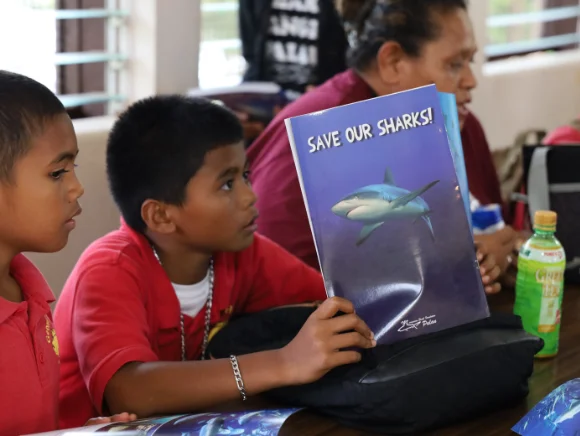
Shark Week isn't just about diving. The Micronesian Shark Foundation, established by Tova and Navot Bornovski, has expanded its mission beyond research. Foundation members visit local schools with specially printed coloring books, teaching 11 and 12-year-olds about shark biology, ecology, and the critical role these animals play in ocean health.
These classroom sessions help young Palauans understand and respect sharks from an early age - building the generation that will carry this conservation work forward long after the divers have gone home.
Research That Reaches Beyond Palau
The Foundation also supports a shark research network, collecting data in Palau's pristine waters that contributes to global conservation efforts alongside institutions like National Geographic Society, Stanford University, and the Australian Institute of Marine Science.
What happens in Palau's waters doesn't stay there. The data gathered here helps shape marine policy and scientific understanding on a global scale.
How Tourism & Conservation Support Each Other
The conservation model works because it's comprehensive. Fish 'n Fins has supported the Foundation since its inception with boats, equipment, fuel, and logistical support, proving that profitable tourism and meaningful conservation aren't mutually exclusive.
Palau's model demonstrates that you don't have to choose between an economy and an ecosystem. Done right, one sustains the other.
The Takeaway
You don't need bait buckets to see sharks. You need healthy oceans, strong protections, and the patience to let nature reveal itself. Palau proved it works, and each year, Shark Week celebrates that success while training the next generation to carry the mission forward.
For those ready to experience sharks on their terms, not ours, Palau's crystal-clear waters are waiting.
🦈
Ready to Dive In?
Explore Fish 'n Fins Hotel & Dive Packages and plan your own Shark Week experience in Palau's protected waters.
United Airlines' new direct flight from Tokyo to Palau transforms a complicated multi-stop journey into a seamless Pacific adventure. Experience Japan's cultural energy and world-class diving in one perfect trip.
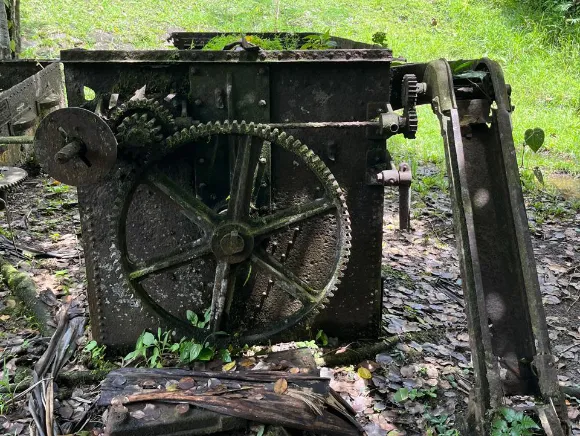
The concrete ruins scattered through the jungle in Ngaremlengui don't look like much today - weathered foundations, rusted machinery, vegetation slowly reclaiming what was once a bustling industrial site. But these remnants of a Japanese pineapple canning factory tell one of Palau's most dramatic stories - how 15,000 Japanese settlers once outnumbered 6,000 Palauans in their own homeland.
Welcome to a travelogue detailing an Australian couple's adventure in the Palau.
Follow their day-by-day journey through Palau's stunning natural wonders and cultural highlights.
Picture this - crystal-clear waters teeming with vibrant marine life, lush jungles hiding ancient secrets, and pristine beaches that feel like they’re straight out of a postcard.
Welcome to Palau, a tropical paradise nestled in the heart of the Pacific Ocean. Known for its world-class diving, breathtaking landscapes, and rich cultural heritage, Palau has earned its place as one of the most sought-after destinations for travelers seeking adventure, relaxation, and unforgettable memories.
Discover why Palau is considered one of the world's premier diving destinations, with its extraordinary marine diversity and pristine underwater landscapes.
From legendary sites like Blue Corner to hidden gems throughout the archipelago, Palau offers unforgettable diving experiences year-round.
Nestled in the crystal-clear waters of the Western Pacific, Palau stands as one of the world's premier diving destinations. This archipelago of over 300 islands offers divers an extraordinary underwater experience with pristine reefs, dramatic drop-offs, and an abundance of marine life. Whether you're a seasoned diver or planning your first tropical dive trip, Palau delivers unforgettable underwater adventures. Let's explore everything you need to know about diving in this Pacific paradise.
Is Palau Good for Scuba Diving?
Palau isn't just good for scuba diving - it's exceptional. Often ranked among the world's top diving destinations, Palau's waters host an incredibly diverse marine ecosystem that few places on Earth can match. The archipelago boasts over 1,500 species of fish and more than 700 species of coral, creating a vibrant underwater landscape teeming with life.
What truly sets Palau apart is its commitment to marine conservation. In 2015, Palau designated its waters as a marine sanctuary, creating one of the world's largest protected marine areas. This conservation effort has allowed marine life to flourish, providing divers with extraordinary encounters with sharks, manta rays, turtles, and vast schools of fish.
The diving conditions in Palau are generally excellent, with water visibility often exceeding 100 feet, allowing divers to fully appreciate the underwater scenery. Water temperatures remain comfortable year-round, typically ranging from 82-86°F (28-30°C), making wetsuits optional for many divers.
While Palau offers sites suitable for beginners, many of its most famous dive sites feature strong currents that require some experience to navigate safely. That said, local dive operators are skilled at matching divers with appropriate sites based on their experience level, ensuring everyone can enjoy Palau's underwater wonders.
What is the Best Month to Dive in Palau?
Traditionally, diving guides have recommended Palau's dry season (November to April) as the optimal time to visit. However, in recent years, the distinction between wet and dry seasons has become less pronounced. Climate change has altered weather patterns, resulting in more consistent conditions throughout the year.
Currently, there isn't a significant difference in rainfall between the traditional "wet" and "dry" seasons – both can experience clear, sunny days and occasional rain showers. The primary distinction now lies in the trade winds that typically arrive during the traditional wet season (May to October). These winds can create choppier surface conditions and larger waves, which may make boat rides to dive sites less comfortable but rarely affect the diving experience once underwater.
Water temperature remains remarkably stable year-round, hovering between 82-86°F (28-30°C), eliminating the need to time your visit based on water comfort. Visibility also remains generally excellent throughout the year, though it may temporarily decrease after heavy rainfall.
Some marine life experiences do follow seasonal patterns. For instance, manta ray sightings tend to be more common from December to March, while certain coral spawning events occur at specific times of the year. If you have particular wildlife interests, it's worth researching these patterns when planning your trip.
Ultimately, Palau offers exceptional diving throughout the year, and the best time to visit may depend more on your schedule and preference regarding topside conditions than on underwater factors.
Activities
Adventure & Culture Tours
Explore Palau with kayaking, snorkeling, cultural, and adventure tours—small groups, expert guides, and stunning landscapes.
Palau features over 50 documented dive sites, each with its own character and appeal. While "best" is subjective and depends on personal preferences, certain sites have achieved legendary status among the global diving community.
Blue Corner stands as Palau's most famous dive site, and for good reason. This underwater plateau features strong currents that attract an astounding concentration of pelagic life. Divers typically hook into the reef with reef hooks (a conservation-friendly practice in this location) and float in the current while observing gray reef sharks, napoleons, barracudas, and massive schools of jacks and snappers swirling in the blue. The experience is often described as "flying underwater" and represents the pinnacle of Palau diving.
German Channel rivals Blue Corner in fame, offering a different but equally spectacular experience. This man-made channel, cut through the reef by German engineers during colonial times, now serves as a corridor for manta rays traveling between the lagoon and ocean. The channel features cleaning stations where mantas come to have parasites removed by smaller fish, providing divers with intimate encounters with these gentle giants. Patient divers may also spot reef sharks and occasionally leopard sharks resting on the sandy bottom.
While these two sites often dominate conversations about Palau diving, the destination offers numerous other world-class sites:
Ulong Channel presents a thrilling drift dive through a coral-lined channel with vibrant reef life and often large schools of fish.
Blue Holes Palau features a series of caverns with sunlight filtering through openings in the ceiling, creating ethereal light effects.
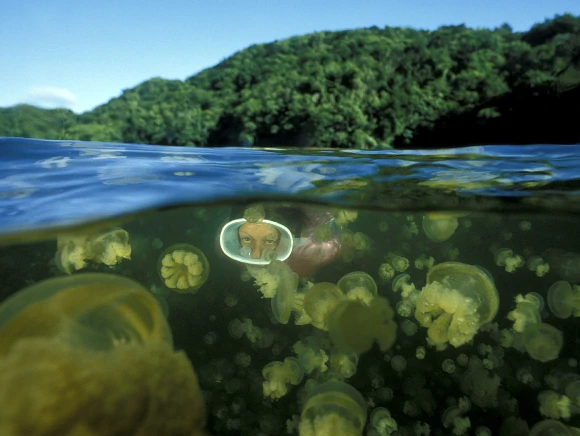
Jellyfish Lake, while a snorkeling rather than diving experience, offers the unique opportunity to swim among millions of non-stinging jellyfish.
Peleliu Wall provides a dramatic vertical drop-off with incredible visibility and the chance to spot larger pelagics.
Fish 'n Fins, Palau's premier dive operator, offers a comprehensive dive site description of all major dive sites on their website, providing detailed information for those wanting to explore specific sites.
How Much is Diving in Palau?
Diving in Palau represents a premium experience with pricing that reflects the destination's remote location, excellent infrastructure, and protected status. While costs can vary based on season and specific operators, understanding the general price structure helps with planning.
Daily diving typically ranges from $190-250 per day for two-tank dives when booking directly with operators. Most dive centers offer package deals, with 5-day packages (10 dives) costing approximately $950-1,250. These packages include boat transportation, tanks, weights, lunch and professional guides but may not include equipment rental.
Fish 'n Fins stands out as Palau's premier dive operator and the only one-stop-shop for hotel and dive packages in the country. They offer package deals with several of the best hotels and resorts in Palau and provide online pricing and booking availability on their website for maximum customer convenience. What sets Fish 'n Fins apart is their high-end service combined with competitive pricing - their 5-dive day packages offer the best value in Palau for divers wanting to maximize their underwater time.
The quality of dive staff can significantly impact your experience, and Fish 'n Fins boasts the most experienced team in Palau. Their guides have worked with the company for many years, knowing the reefs and especially the currents and sites like the back of their fins. This expertise translates to enhanced safety and better wildlife encounters, as experienced guides know exactly where and when to look for marine life. Fish 'n Fins puts the comfort and safety of guests first, consistently going the extra mile to ensure memorable diving experiences.
For those needing to rent gear, full equipment packages (BCD, regulator, wetsuit, mask, fins) typically cost $35-50 per day, with discounts for longer rentals. Many operators offer free nitrox for certified nitrox divers, adding value for those qualified.
Additional costs to consider include:
Koror State Permit: This permit includes access to the Rock Islands and costs $50, valid for 5 days
Jellyfish Lake entry: $100 (if planning to visit this unique attraction, includes $50 Koror State Permit, valid for 5 days)
For divers seeking the ultimate Palau experience, liveaboards provide intensive diving schedules and access to more remote sites. The Ocean Hunter Palau is widely regarded as the best liveaboard option in Palau, offering up to 5 dives daily and the finest cuisine of all liveaboards in the region. What truly distinguishes Ocean Hunter is its exceptionally experienced staff, with each crew member having been with the company for over 10 years. This level of experience and continuity is rare in the diving industry and ensures guests receive unparalleled service and expertise.
Liveaboard prices typically range from $3,000-5,000 per person for a 7-night trip, depending on the vessel's luxury level and the cabin type. While this represents a significant investment, the comprehensive diving experience and quality of service provided by operations like Ocean Hunter justify the cost for many dedicated divers.
When budgeting for a week of diving in Palau, plan for approximately $1,600-2,500 per person for diving and accommodation only, meals, and international transportation not included. While not an inexpensive destination, most divers find the extraordinary underwater experiences justify the investment.
Conclusion
Palau stands as a testament to what happens when nature is respected and protected – an underwater wonderland of extraordinary biodiversity and beauty. From heart-pumping drift dives alongside sharks at Blue Corner to serene encounters with manta rays at German Channel, Palau delivers the full spectrum of diving experiences.
The quality of your dive operation can make or break a Palau diving trip, particularly given the challenging currents at some sites. Choosing an established operator like Fish 'n Fins with experienced guides who understand local conditions ensures not only safety but also maximizes wildlife encounters and overall enjoyment. Their combination of comprehensive services, from hotel packages to equipment rental, simplifies the logistics of a Palau diving vacation.
For those seeking the most immersive experience, the Ocean Hunter liveaboard provides the opportunity to live and breathe Palau diving, with multiple daily dives, gourmet meals, and the guidance of the most experienced crew in Palau's waters.
While reaching this remote paradise requires effort and investment, those who make the journey rarely regret it. Palau consistently ranks among divers' most memorable destinations, often becoming a place they return to repeatedly throughout their diving careers.
Whether you're drawn by the legendary dive sites, the conservation success story, or simply the allure of diving in one of the planet's last pristine marine environments, Palau deserves its place on every serious diver's bucket list. The memories of drifting in clear blue water, surrounded by thriving marine life, will remain long after your tanks are dry and your logbook is filled.
Discover how Palau is leading the way in sustainable diving and ocean conservation. This blog explores Palau’s groundbreaking initiatives, eco-friendly diving practices, and the unforgettable experiences it offers to divers worldwide.
Discover Palau's incredible underwater history, from WWII wrecks to vibrant coral reefs. This article explores the stories behind iconic dive sites and the unforgettable experiences offered by Fish ’n Fins.
Sharks are often misunderstood and feared, but they are essential to the balance of marine ecosystems. As apex predators, they help regulate the populations of other species, ensuring that no single group dominates the ocean. This balance is crucial for the health of coral reefs and other marine habitats, which in turn support the broader biodiversity of the oceans.
When you think of diving in Palau, certain creatures come to mind right away—Napoleon wrasse, manta rays, dugongs, and, of course, sharks. These animals are the stars of the show, making every dive unforgettable. Let’s talk about where you can see them and what makes these dive spots so special when you’re exploring with Fish 'n Fins.
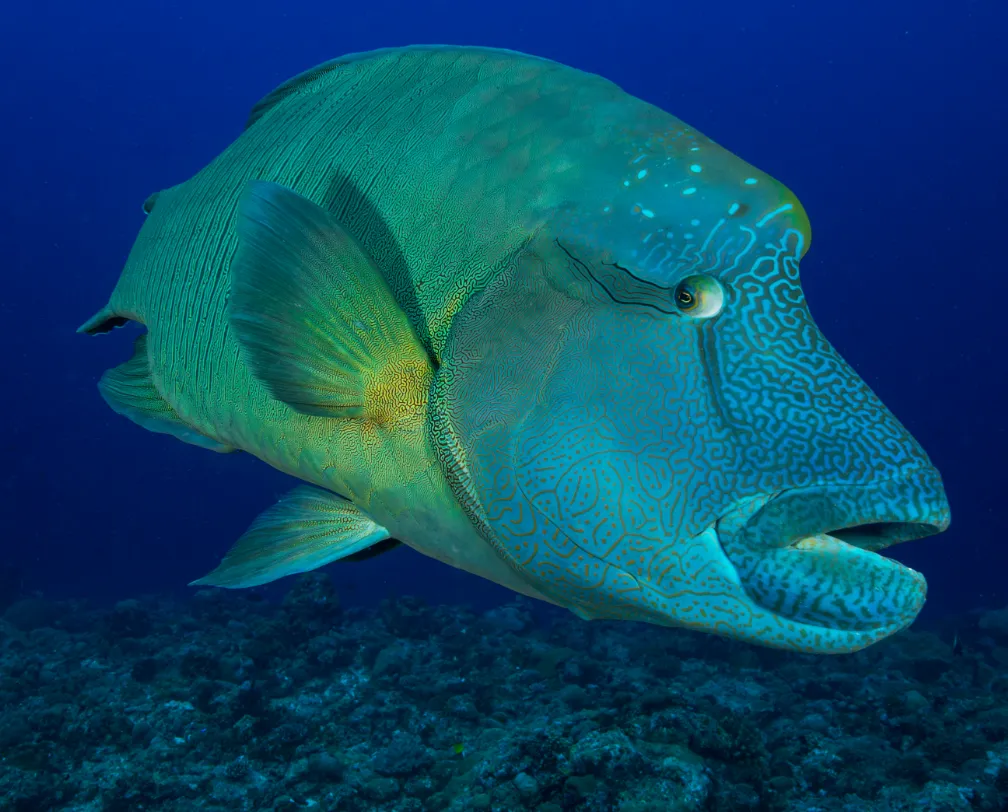
When it comes to diving adventures that combine breathtaking marine life with top-notch facilities, Palau stands out, especially for those eager to meet the ocean's gentle giants, the Napoleon Wrasse. For the best experience, diving with Palau’s pioneer dive shop, Fish 'n Fins, or aboard the Ocean Hunter liveaboard offers an unparalleled opportunity to explore this pristine underwater world.
Blue Corner - A Display of Marine Majesty
At Blue Corner, divers are treated to dramatic encounters with the Napoleon Wrasse. Known for its bold and curious nature, this fish often comes close enough to share a moment of connection with the divers. The strong currents here bring a dynamic mix of marine life to the fore, providing a perfect stage for these majestic creatures to perform. Photographers find this site a paradise, where the clarity of the water and the abundance of light make it ideal for capturing the vibrant hues and grandeur of the Napoleon Wrasse.
Siaes Corner - Dive with the Young Explorers
Siaes Corner offers a contrasting experience with its calmer currents and abundant juvenile Napoleon Wrasse population. This site allows divers to observe the nurturing environment that supports the growth of these young wrasses. The intricate coral formations and gentle waters make Siaes Corner a spectacular site for those looking to enjoy a more serene dive, watching the youthful antics of the Napoleon Wrasse amidst a backdrop of rich biodiversity.
Choosing the Best in Palau
Opting to dive with Fish 'n Fins or aboard the Ocean Hunter liveaboard enhances your diving journey. Both offer expert guidance and access to the best spots, ensuring every dive is safe, enjoyable, and filled with memorable encounters. Fish 'n Fins, as the pioneer dive shop in Palau, brings decades of experience and a commitment to excellence that is unmatched.
Explore More on Fish 'n Fins Website
For those looking to plan their dive in detail, the Fish 'n Fins website offers comprehensive descriptions of both Blue Corner and Siaes Corner, among other sites. Here, divers can find all the information needed to prepare for their underwater adventures, from current conditions to the biodiversity they can expect to encounter.
A Dive Worth Taking
Palau is not just a diving destination; it’s an experience, enriched by the presence of the Napoleon Wrasse and facilitated by world-class diving services like Fish 'n Fins and the Ocean Hunter liveaboard. Whether you’re hovering in the currents at Blue Corner or floating over the serene reefs at Siaes Corner, Palau offers an intimate and awe-inspiring glimpse into the lives of one of the ocean’s most impressive inhabitants.
Book your Flight with Nauru Airlines
Go an unforgettable journey from Brisbane to Palau with Nauru Airlines. Experience the beauty of the Pacific in comfort and style. Book your flight ONLINE.
Palau, an archipelago teeming with life and natural beauty, offers divers an unparalleled underwater experience. This paradise is renowned not only for its stunning coral reefs, vibrant marine life, and historical wrecks but also for its enchanting sea turtles, which are one of the main attractions in Palau. As you explore Palau's diverse dive sites, you'll encounter these gentle giants, adding an unforgettable highlight to your underwater adventures.
In the pristine waters of the Pacific, the Republic of Palau is not just a paradise for divers; it's a global leader in marine conservation. Known for establishing the world's first shark sanctuary and dedicating vast areas as no-fishing zones, Palau’s commitment to environmental protection is renowned. Yet, its most innovative venture might just be the "Zero to Hero" initiative, a testament to its forward-thinking approach to education and sustainable development.
In the world of divers, there are places that are more than just a destination – they are true dreams. Palau, an archipelago in the heart of the Pacific, tops the list of these dream destinations. With its over 500 islands floating in a sea of various shades of blue, Palau offers an underwater experience that is second to none. The visibility underwater, the diversity of marine life, and the incredible coral formations make each dive an unforgettable adventure.
Exciting times are ahead for travelers! In our latest post, we spotlight Alii Palau Airlines' new direct flight from Singapore to Palau. Dive in to discover how this pivotal connection is set to transform your travel experience to Palau's paradise.
Palau, a paradise nestled in the western Pacific, is revered for its underwater marvels and pristine landscapes. However, beyond its natural allure lies a rich cultural tapestry waiting to be explored. Fish 'n Fins, your gateway to Palau’s aquatic and terrestrial wonders, invites you to delve deeper into the heart of this enchanting island nation.
Article by Fish 'n Fins and Ocean Hunter guest Stephen Wolborsky
While Palau is famous for thrilling drift dives, gorgeous reefs, and breathtaking big animals at its outer atoll, there is, in fact, another side to it, one less obvious to the casual visitor.
Herzlich willkommen zur Shark Week Palau 2024, dem ultimativen Tauchabenteuer, das Naturschutz und luxuriöses Erlebnis in einem beispiellosen Event verbindet. Tauch ein in das azurblaue Wasser Palau's und erleb ein marines Paradies, das die Heimat einiger der bemerkenswertesten Meeresbewohner der Welt ist.
Embark on a journey of unparalleled adventure and luxury with the most sought-after liveaboard experience in Palau. Ocean Hunter Liveaboard has earned its reputation as a world-class destination, consistently adorned with international awards and praise from divers across the globe.
If you're a diving enthusiast or even just a curious adventurer, this blog is a must-read. We've delved deep into the heart of one of the world's most spectacular diving destinations - Palau. This Pacific paradise offers an underwater experience like no other, and we're here to guide you through it.
A New Law in Palau Prohibits Electronic Cigarettes for Commercial Purposes. Palau, a small island nation in the Pacific, has recently passed a new law that recognizes the health risks of electronic cigarettes and expands The Tobacco Control Act to include electronic cigarettes.
Welcome to Palau, a breathtaking tropical paradise that's home to crystal-clear waters, lush green landscapes, and some of the world's best diving sites. Whether you're planning a romantic getaway, a family vacation, or an adventure-packed trip, finding the perfect place to stay is essential to make the most out of your Palau experience. With a wide variety of accommodation options to choose from, including luxury resorts, budget-friendly guesthouses, vacation rentals, and eco-resorts, there's something for every traveler's taste and budget in Palau. In this guide, we'll explore the different types of accommodation available in Palau, the best locations to stay depending on your interests, and provide tips for booking the perfect stay in this tropical paradise.
The Republic of Palau, an archipelago located in the western Pacific Ocean, is known for its pristine waters, diverse marine life, and stunning natural beauty. However, what sets Palau apart from other tropical paradises is its commitment to environmental conservation and sustainability. Palau has become a prominent environmental poster boy, setting an example for other nations to follow.
In the annals of World War II, the Pacific Theater remains one of the most brutal and tragic chapters of the conflict. Battles were fought across vast expanses of ocean and on countless islands, each with its own unique history and legacy. One of these islands, Peleliu Island, was the site of one of the bloodiest battles of the Pacific War. In this article, we will delve into the history of Peleliu Island and the Battle of Peleliu, exploring the tactics used by both sides and the impact the battle had on the island and its people. We will also examine the legacy of the battle and its significance in the larger context of World War II. Join us as we dive into the history of Peleliu Island and explore the horrors and sacrifices of the Pacific War.
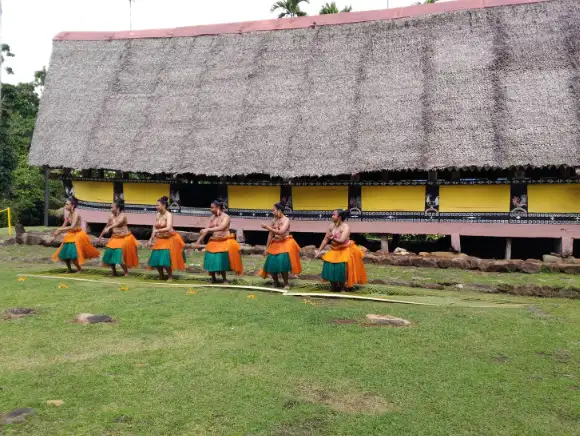
The Palauan Bai, or the men's house, is a cultural institution that has played a significant role in the history and development of Palauan society. As a traditional gathering place and community center, the Bai has served various functions, such as a venue for religious ceremonies, a place for community meetings, and a center for teaching traditional skills and crafts to younger generations. In this article, we will explore the history, significance, structure, functions, and cultural context of the Palauan Bai.
Our website is dedicated to providing you with the latest and most accurate information about the creatures that inhabit our oceans. Today, we focus on two of the most beloved sea turtle species - the hawksbill and green sea turtle. These two turtles are not only beautiful to look at, but they also play a crucial role in the marine ecosystem. Join us as we explore the differences between these two species, from their shell shape to their diet and habitat. With a better understanding of these amazing creatures, we hope to inspire you to take action and help protect them for future generations.
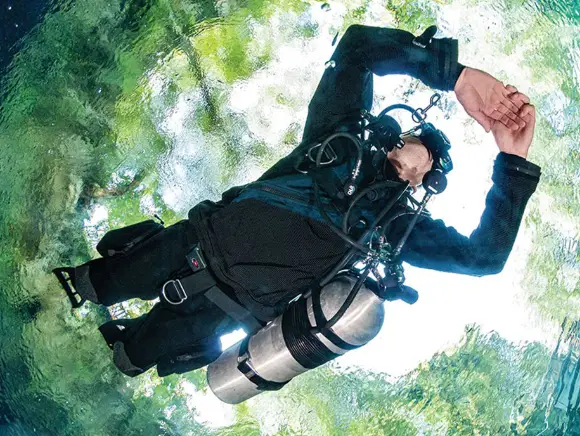
Side mount diving is a scuba diving technique that involves carrying cylinders on either side of the body rather than on the back. This method of diving has been gaining in popularity in recent years due to its versatility and benefits over traditional back-mounted scuba diving. In this article, we will discuss the history, benefits, equipment, and training required for side mount diving.
At Fish 'n Fins, we take very good care of Underwater Photographers. Our boats are spacious providing ample room for photographers and camera rigs, no matter what size and make. Our dive guides know every inch of Palau's reefs and are very enthusiastic to find great photo opportunities or be models in wide-angle shots with sharks, WWII wrecks or colorful corals.
Of the two dozen Palauan dive centers the largest, and perhaps the most famous is undoubtedly Fish 'n Fins, a long-term reliable partner of "Ultimate Depth Magazine Russia".
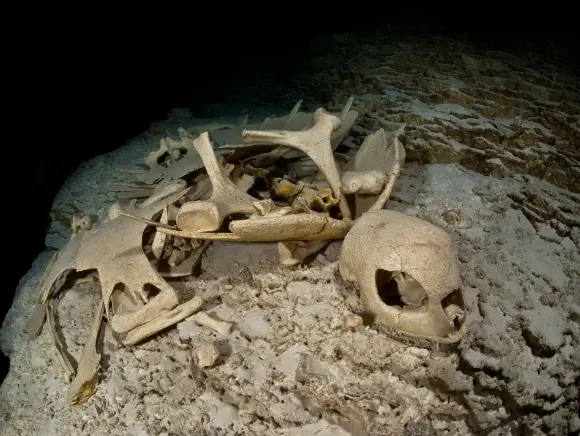
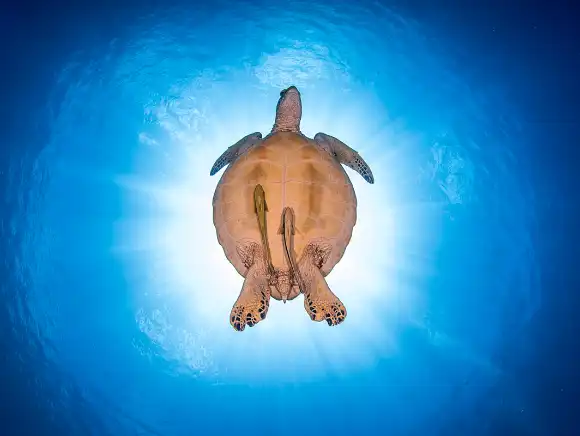
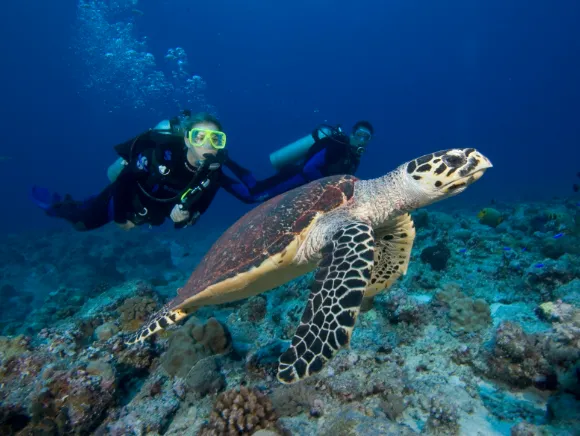
We have two species of sea turtles in Palau, the Green Sea Turtle, and the Hawksbill Sea Turtle, both protected by the environmental protection laws of Palau. Hence we have a lot of turtles and they are very relaxed around us divers. While you dive Palau you'll surely see a couple of them and will be able to take underwater photos home. To give you more information on the critically endangered Hawksbill Turtles we've compiled the following information about this species. We hope you'll enjoy the read.
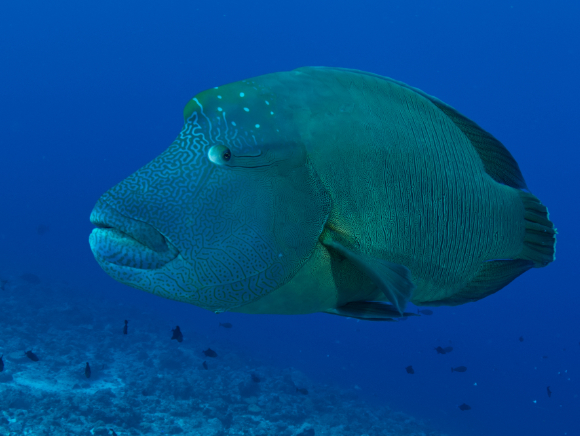
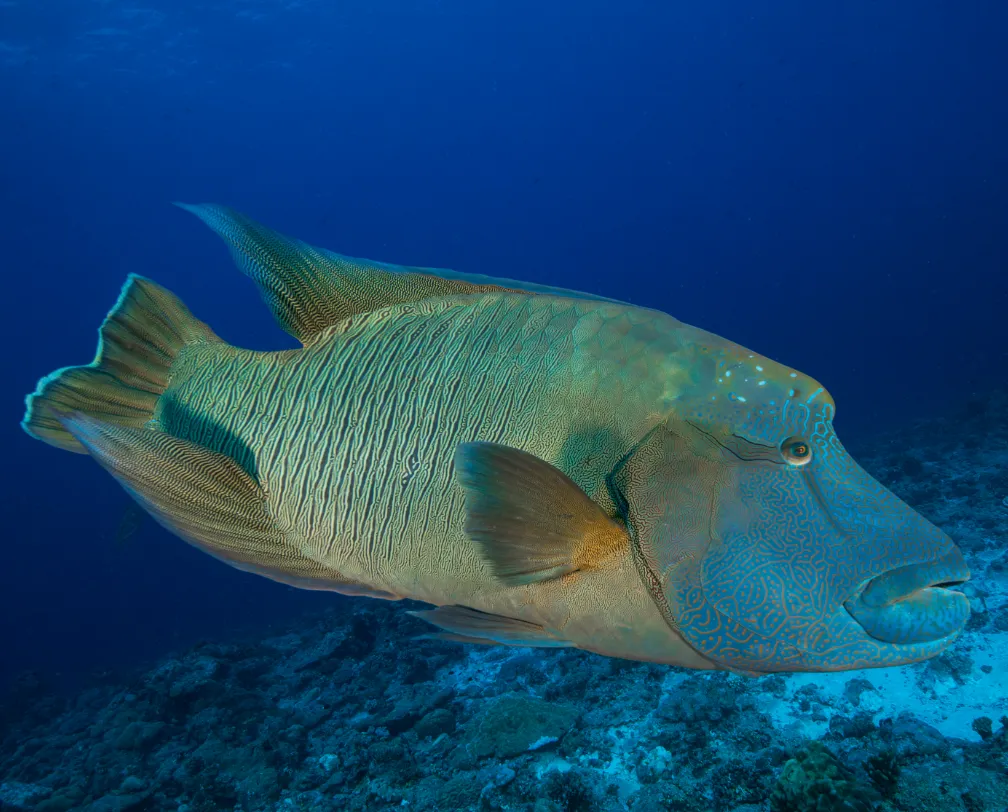
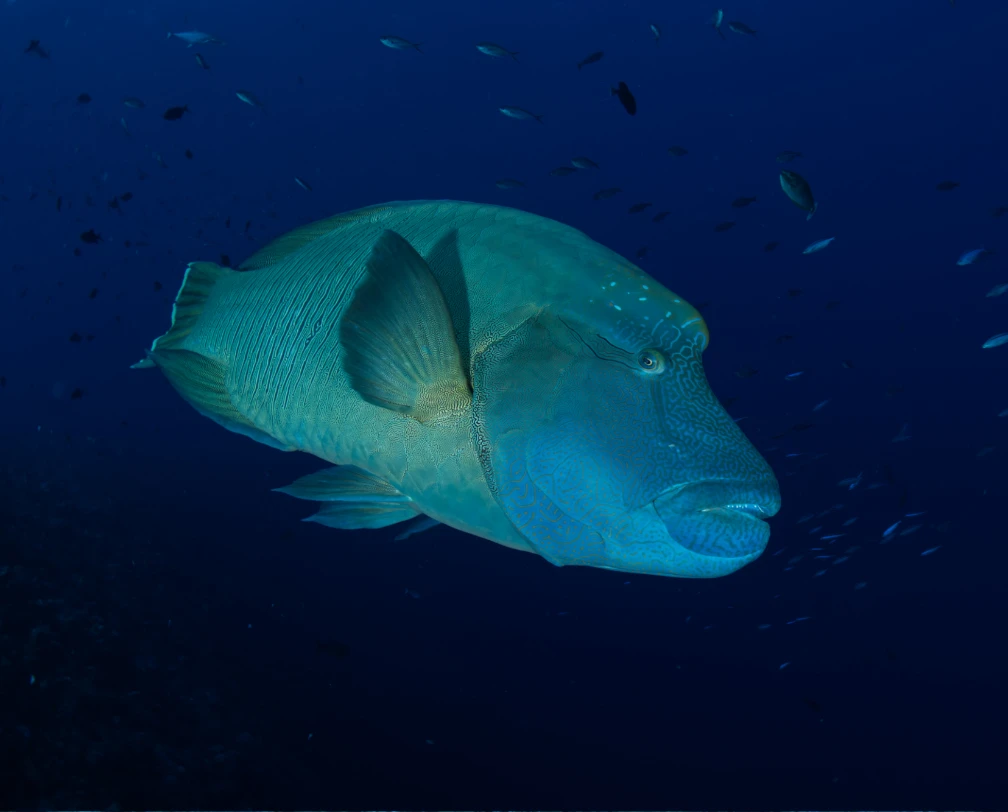
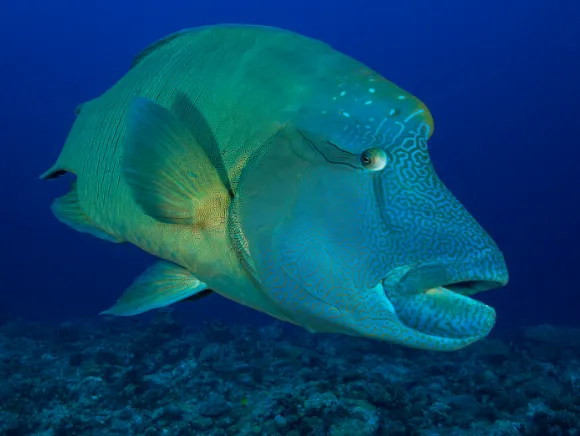
As a diver, you know and have many times encountered this friendly and curious fish, the Napoleon wrasse (Humphead Wrasse). During dives, such as the Blue Corner in Palau, these fish come very close and pose for photos. Unfortunately, these friendly giants are under increasing pressure and, according to the World Conservation Union, stocks have declined more than 50% in the past 30 years, and in some local areas even by 90%. Apart from climate change, which leads to rising water temperatures, and thus dwindling reefs and habitats for its residents, the "gourmet" has become an increasing problem. In some Asian fish markets, one kilogram (roughly 2 pounds) of this friendly giant costs up to $ 400.00. This leads to increasing pressure for this amazing creature.
When I opened my email this morning I found an article about the United Kingdom banning Shark Finning and the import of Shark Fin products. Their attorney general said in a press statement, "We have decided to ban the import of detached shark fins as well as shark fin products. The practice is also unforgivably wasteful and our action will not only help boost shark numbers, but it will also send a message that we do not support any such industry that forces species to the brink of extinction.”
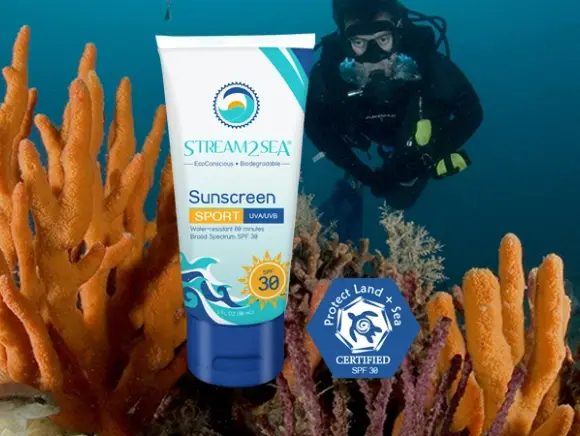
After Palau became the first country in the world to ban the use of harmful sunscreens in 2020, Thailand and Hawaii have now followed Palau's example and banned sunscreens containing oxybenzone, octinoxate, 4MBC and butylparaben.
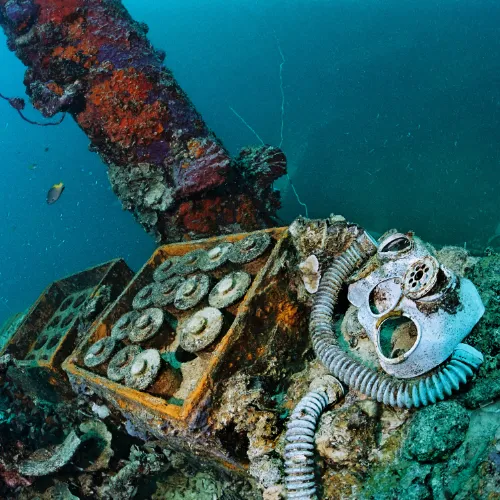
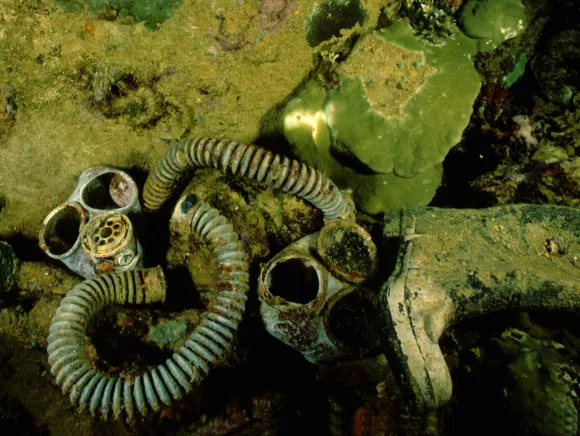
It is well known that the pristine islands of the Republic of Palau are a volcanic archipelago spread over the western Pacific Ocean with some of the most spectacular scenery on the planet. However, as stunning as Palau’s islands are and as breathtaking its underwater world - while known for pristine reefs, deep blue waters, and big fish, beneath the surface, Palau offers an underwater museum of over 30 spectacular WWII wrecks providing a glimpse into the country’s past.
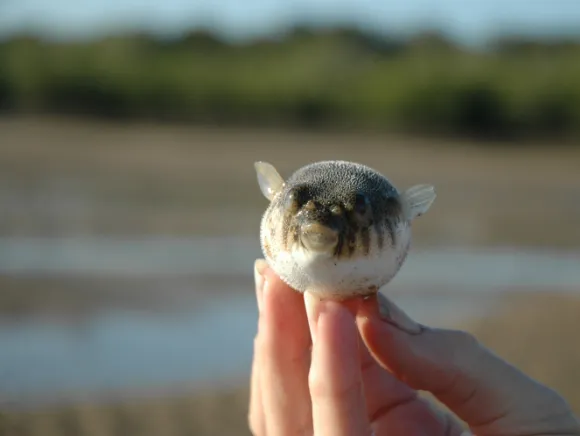
You can meet them at many dive sites in Palau, they are cute little fish and come in a variety of colors and body shapes. They move slowly and are a great photo subject. They look harmless, but they know very well how to defend themselves from attackers. Read more about puffer fish in this blog.
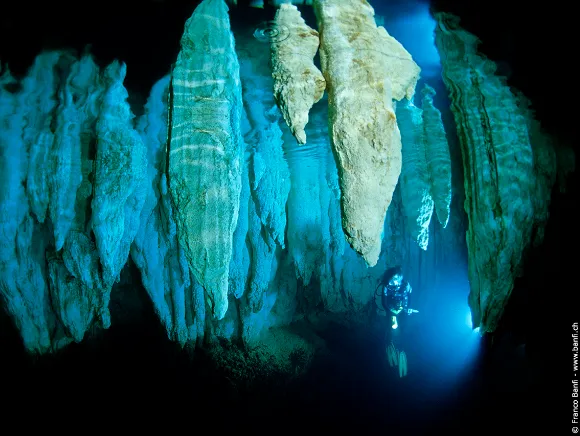
I know Franco for many years and admire his great photos. It was no surprise to me to see when starting my job with Fish 'n Fins that Franco had been one of our happy customers. Hence it was very easy to get him to agree to be featured on FNF MAG and display some of his underwater art.
We would like to introduce Rose & Udo Kefrig, two very good old friends who have been with Fish ’n Fins many times over the years and who have made many stories about Palau, Fish ’n Fins, and our Ocean Hunter Liveaboards. I met them at the Fish ’n Fins/Ocean Hunter booth at Boot 2019 in Germany and I asked them if they would feel like being featured at FNF MAG and here we are.